
Statutory Audit Requirements in the UAE (2026): Who Needs an Audit
 February 28, 2021
6 min read
Every year, UAE business owners ask the same question: does my company legally need a statutory audit? For most companies the answer is yes, but the rule that requires it depends on where you are licensed and how big you are. This guide sets out the statutory audit requirements in the UAE in 2026: what the law says for mainland companies, how free zones apply it, what Corporate Tax adds, and what happens if you skip it.
Quick answer: Mainland LLCs and joint stock companies must appoint an auditor under the UAE Commercial Companies Law. Almost every free zone requires audited financial statements to renew your licence. Under Corporate Tax, businesses with revenue above AED 50 million and all Qualifying Free Zone Persons must also prepare audited financial statements. Sole establishments and some small entities may be exempt, but banks, investors and licensing authorities often ask for an audit anyway.
What is a statutory audit?
A statutory audit is an independent examination of your company’s financial statements, required by law or by your licensing authority. A licensed auditor checks that the accounts give a true and fair view under International Financial Reporting Standards (IFRS) and issues an audit report. It is different from an internal audit, which reviews processes for management, and from a tax audit by the Federal Tax Authority.
Who needs a statutory audit in the UAE?
| Type of business | Audit required? | Why |
|---|---|---|
| Mainland LLC | Yes | The Commercial Companies Law requires an LLC to appoint an auditor and have its annual accounts audited |
| Joint stock company (PJSC / PrJSC) | Yes | Required by the Commercial Companies Law, with extra rules for listed companies |
| Free zone company | Almost always | Most free zones (DMCC, JAFZA, DAFZA, IFZA, RAKEZ and others) require audited accounts to renew the licence |
| Branch of a foreign or UAE company | Usually | Many licensing authorities ask for audited branch accounts at renewal |
| Sole establishment / civil company | Not always by law | But often needed for Corporate Tax, banks, tenders or licence renewal |
| Any business with revenue over AED 50m | Yes | Corporate Tax rules require audited financial statements |
| Qualifying Free Zone Person | Yes | Audited accounts are a condition of the 0% Corporate Tax rate |
For a free zone-by-free zone breakdown, see our complete guide to audit requirements in UAE free zones. For Dubai specifically, see is audit mandatory for all companies in Dubai?
Mainland companies: what the law requires
Federal Decree-Law No. 32 of 2021 on Commercial Companies requires companies such as LLCs and joint stock companies to appoint one or more auditors, normally for a renewable one-year term, and to keep proper accounts so the annual financial statements can be audited. The audited accounts are presented to the shareholders, and the auditor must be licensed to practise in the UAE.
In practice, the Department of Economy and Tourism and other licensing authorities may also ask for audited accounts at licence renewal, and banks usually require them for credit facilities.
Free zone companies
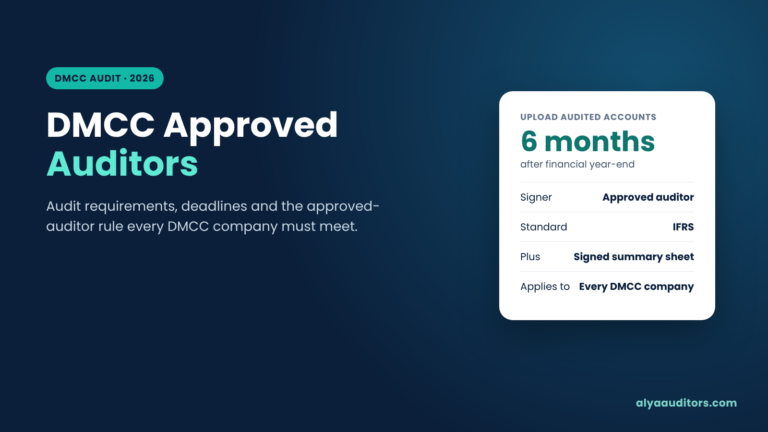
Each free zone sets its own rules, but almost all require companies to submit audited financial statements every year, usually within a set number of months after the financial year end, before the licence can be renewed. Many free zones also require the auditor to be on their approved list. IFZA, for example, made audited financial statements mandatory for licence renewal from September 2025.
Check your free zone’s current deadline and approved-auditor list, or see our approved auditors by free zone.
What Corporate Tax adds
Since UAE Corporate Tax started in 2023, audited financial statements are also a tax requirement for:
- Businesses with revenue above AED 50 million in the tax period
- Qualifying Free Zone Persons that want the 0% rate on qualifying income
Even where an audit is not required for tax, your Corporate Tax return is prepared from your financial statements, so accurate, audit-ready accounts make filing faster and safer. See Corporate Tax in the UAE.
Who can carry out a statutory audit?
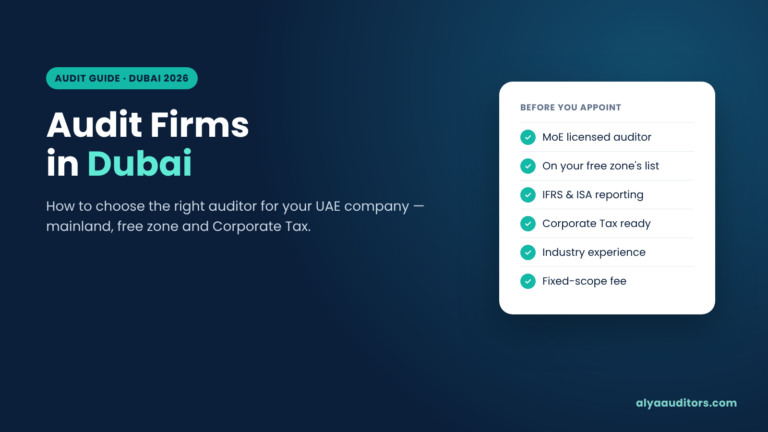
- The auditor must be licensed to practise audit in the UAE and registered with the Ministry of Economy.
- Free zone companies usually need an auditor approved by their free zone.
- The auditor must be independent: they cannot audit accounts they prepared themselves, or a company they have a financial interest in.
- The audit is carried out under International Standards on Auditing (ISA), on accounts prepared under IFRS.
What happens if you do not get an audit?
- Licence renewal is refused or delayed, especially in free zones.
- Fines from the licensing authority or free zone.
- Corporate Tax risk: a Qualifying Free Zone Person without audited accounts can lose the 0% rate, and large businesses fall out of compliance.
- Banking problems: banks may freeze facilities or refuse new credit.
- Visa and immigration delays linked to an expired licence.
Documents your auditor will need
- Trade licence and Memorandum / Articles of Association
- Trial balance, general ledger and the draft financial statements
- Bank statements and bank confirmations for every account
- Sales and purchase invoices, contracts and agreements
- Fixed asset register, stock records and payroll records
- VAT and Corporate Tax returns filed during the year
- Last year’s audited financial statements, if any
How long does a statutory audit take?
Once records are ready, a small business audit usually takes about 5 to 7 working days, a medium business 1 to 2 weeks, and a large company 2 to 4 weeks. The biggest cause of delay is incomplete records, so start preparing as soon as your financial year closes.
How Alya Auditors can help
We are a UAE-licensed audit firm and approved auditors in the major free zones. We carry out statutory audits for mainland and free zone companies, and our accounting team can get your books audit-ready first. See our statutory audit services.
Get a quote for your statutory audit →
Frequently asked questions
Is a statutory audit mandatory for an LLC in the UAE?
Yes. Under the Commercial Companies Law, a mainland LLC must appoint an auditor and have its annual financial statements audited.
Do free zone companies need an annual audit?
Almost always. Most free zones require audited financial statements to renew the licence, usually prepared by an auditor on their approved list.
Does a small business need an audit for Corporate Tax?
Corporate Tax requires audited accounts only for revenue above AED 50 million and for Qualifying Free Zone Persons. A small mainland business may still need an audit under company law or for its licence.
Can my accountant also be my auditor?
No. An auditor must be independent and cannot audit accounts they prepared. Many firms offer both services, but to different clients, or keep the two strictly separate.
Which accounting standard do audited accounts follow?
IFRS. For Corporate Tax, businesses with revenue under AED 50 million may use IFRS for SMEs.
This guide reflects UAE rules as we understand them in October 2026. Licensing authorities update their requirements, so confirm your deadline with your free zone or licensing department.

Keep reading

Ready to Start?
Talk to a UAE compliance expert
Book a free, no-obligation consultation with ALYA Nexus Auditing.
Book Free Consultation ↗