

Why Audit Outsourcing Is Growing in the UAE
Audit outsourcing UAE demand has shifted from a niche cost-saving tactic to a mainstream response to a market that changed faster than most firms could staff for. A few years ago, outsourcing an audit engagement was mostly a small-firm workaround. Today, it’s a trend visible across firm sizes, industries, and jurisdictions.
The shift didn’t happen by accident. A handful of specific regulatory and market forces converged over the past two to three years, and each one independently pushed more audit work toward outsourced and white label delivery models — regardless of what any individual firm decided to do about it.
This piece looks at what’s actually driving the trend — not just that it’s happening, but why now, and what it signals for anyone deciding whether to build in-house audit capability or partner for it instead of competing for scarce hiring talent.
Quick Answer: Audit outsourcing UAE demand is growing because corporate tax introduced mandatory audits for many companies that never needed one before, UAE company registrations more than doubled between 2020 and 2024, SME audit frequency has climbed sharply since the corporate tax transition period ended, and a shortage of licensed auditors is making in-house hiring slower and more expensive than partnering for the same capability.
Table of Contents
1. What’s Actually Meant by Audit Outsourcing in the UAE
Audit outsourcing means a business or accounting firm hands a statutory audit engagement to an external, accredited audit firm rather than handling it with in-house staff. The client relationship can stay with the original firm; the technical audit work is delivered by a specialised partner instead, under terms both sides agree upfront.
We’ve covered the mechanics of this in detail in why small accounting firms should outsource audit work — this piece focuses on a different question: why demand for that model has grown so quickly across the UAE market as a whole.
2. Corporate Tax Created Audit Demand That Didn’t Exist Before
Before Federal Decree-Law No. 47 of 2022, a huge share of UAE companies had no audit obligation at all. Corporate tax changed that directly: companies with revenue above AED 50 million now need audited financials to support their tax position, and free zone companies claiming the 0% Qualifying Free Zone Person rate need a statutory audit regardless of revenue size.
That’s not a small adjustment. It converted audit from a service reserved for larger, more established companies into a requirement touching a much broader slice of the market — including many companies whose owners had never engaged an auditor before, and had no existing relationship with one.
Before this shift, an accounting practice could go years without a client needing a statutory audit. Now, a first-time audit conversation is a routine part of onboarding a new corporate tax client — a change in volume, not just in who’s affected.
The AED 50 Million Threshold Isn’t the Whole Story
Even companies well below that revenue threshold are affected indirectly, since corporate tax filings for any business increasingly get scrutinised against underlying records — and a business without audited financials has a weaker position if the FTA ever questions a filing, threshold or no threshold.
3. The UAE Company Base Has More Than Doubled
Industry reporting puts UAE company registrations at roughly 405,000 in mid-2020, climbing to over 1.02 million by mid-2024 — a 152% increase in four years. Every one of those new companies is a potential audit client at some point, whether through corporate tax thresholds, free zone requirements, licence renewal, or eventual liquidation.
No accounting or audit sector grows its licensed headcount at anywhere close to that pace. The gap between how fast the client base grew and how fast the supply of registered auditors grew is, on its own, enough to explain a meaningful share of the shift toward outsourcing.
It’s worth being precise about what that gap means in practice: it’s not that firms became less capable, it’s that no realistic hiring pipeline could have scaled proportionally to a market that more than doubled in four years.
4. SME Audit Frequency Has Climbed Sharply
Industry data reported in early 2026 put the rise in SME audit frequency at roughly 35% over the preceding eighteen months, as the corporate tax transition period came to an end and stricter FTA enforcement took hold. Smaller businesses that once treated audit as optional, or something only larger competitors dealt with, are now facing it as a recurring, non-negotiable requirement.
SMEs are also the segment least likely to have the budget or volume to justify hiring a dedicated in-house auditor — which makes outsourcing the default option for exactly the part of the market growing fastest.
That combination — the segment facing audit for the first time also being the segment least equipped to hire for it internally — is a large part of why outsourcing demand has scaled so quickly rather than growing gradually alongside overall market size.
5. A Real Shortage of Licensed Auditors
Only auditors registered with the Ministry of Economy’s Auditors Department can legally sign a statutory audit report in the UAE. That licensing requirement, combined with a genuinely competitive hiring market for qualified accounting and audit professionals, means the supply of people who can sign an audit report hasn’t kept pace with demand for audits.
Firms that need audit capability today face a choice: compete for a limited pool of registered auditors in a tight hiring market, or partner with a firm that already has that capacity built. Outsourcing is increasingly the faster and cheaper path to the same outcome.
This isn’t unique to audit, but it’s more acute there than in general accounting, since the legal requirement to hold a specific registration narrows the talent pool far more than a general bookkeeping or tax role would.
6. Stricter Enforcement Has Raised the Cost of Getting It Wrong
Cabinet Decision No. 129 of 2025, effective 14 April 2026, brought VAT and corporate tax penalties under a tightened, unified enforcement framework. Combined with the FTA’s move toward continuous compliance visibility through the EmaraTax platform, the margin for informal or under-resourced audit work has narrowed considerably.
Businesses that once treated compliance as a once-a-year scramble are increasingly choosing a specialised partner instead of risking a rejected audit report or a penalty for records that can’t withstand scrutiny.
The FTA’s move toward continuous visibility also changes the timing pressure. It’s no longer realistic to treat audit and tax compliance as separate, sequential tasks handled whenever there’s spare capacity — the two increasingly need to move in lockstep, which favours a partner already set up to coordinate both.
7. Free Zone Growth Has Multiplied Jurisdiction-Specific Requirements
Every free zone maintains its own approved auditors list, separate from the federal Ministry of Economy register. As the number of active free zone companies has grown alongside the broader UAE company base, so has the number of businesses needing an auditor specifically approved for their jurisdiction — DMCC, JAFZA, DIFC, IFZA, and dozens of others.
Very few accounting practices hold approval across every free zone their clients might touch. Outsourcing to a partner with broader jurisdictional coverage solves a problem that simply didn’t exist at this scale a few years ago.
A practice serving clients across three or four free zones would once have needed direct approval in each one, or turned away audit work outside its home jurisdiction. A single outsourcing partner with multi-zone coverage removes that constraint entirely, regardless of how many jurisdictions a client base eventually spans.
8. What This Trend Signals for Firms Deciding How to Respond
None of these forces are temporary blips. Corporate tax isn’t being repealed, the company base isn’t shrinking, and the auditor licensing requirement isn’t going away. That makes audit outsourcing less of a passing trend and more of a structural shift in how audit work gets delivered across the UAE market — one that’s likely to keep compounding rather than plateauing anytime soon.
For a firm weighing whether to build in-house audit capability or partner for it, why small accounting firms should outsource audit work and how to scale an accounting practice without hiring both cover the practical decision in more depth than this piece — the point here is simply that the market conditions behind that decision are unlikely to reverse.
A Worked Example: One Free Zone, Five Years
Picture a mid-sized free zone that had roughly 2,000 active companies in 2020. By 2024, in line with the broader UAE growth pattern, that number could realistically have grown well past 4,000 — and every one of those companies claiming a 0% Qualifying Free Zone Person rate now needs an annual statutory audit to keep it, year after year, without exception.
No single accounting practice serving that free zone scaled its own registered auditor headcount at the same pace. The practices that grew alongside their client base almost universally did it by adding outsourcing capacity, not by matching client growth with proportional in-house hiring — because at that pace, matching hiring to demand was never realistically possible for a practice of any reasonable size.
9. Why Partner With Alya Auditors
Alya Auditors provides audit and assurance services and free zone-approved audits built for exactly this shift — accredited capacity that scales with a market growing faster than most individual firms can staff for on their own.
Image Suggestions (For Publishing)
- Featured image: a growth chart overlaid on a UAE skyline — alt text: “audit outsourcing UAE demand growth”
- Section 3 (company base growth): a simple line chart, 2020-2024 company registrations — alt text: “UAE company registration growth driving audit outsourcing UAE”
- Section 4 (SME audit frequency): a simple bar chart showing the 35% rise — alt text: “SME audit frequency increase in the UAE”
Use descriptive file names (e.g. audit-outsourcing-uae-growth-chart.jpg) rather than generic camera filenames.
Internal Linking Suggestions (For Publishing)
When this article goes live on alyaauditors.com, link the following existing pages within the body copy:
- Why Small Accounting Firms Should Outsource Audit Work — anchor: “why small accounting firms should outsource audit work” (Section 1/8)
- How to Scale an Accounting Practice Without Hiring — anchor: “how to scale an accounting practice without hiring” (Section 8)
- Audit and Assurance Service — anchor: “audit and assurance services” (Section 9)
- Audit in Free Zones — anchor: “free zone-approved audits” (Section 9)
- UAE Corporate Tax Registration Mistakes — anchor: “corporate tax” (Section 2)
- 10 Services Every Business Setup Company Should Offer — anchor: “statutory audit” (Section 2, ties into the services listicle’s audit section)
Frequently Asked Questions
Why is audit outsourcing growing in the UAE right now?
Corporate tax introduced audit requirements for companies that never needed one before, the UAE company base has more than doubled since 2020, and a shortage of licensed auditors makes outsourcing faster and cheaper than hiring in-house for most firms.
Is audit outsourcing only for small accounting firms?
No. While small firms adopted it earliest out of necessity, SMEs facing audit for the first time under corporate tax, and larger practices managing overflow during peak season, are increasingly using outsourcing too.
Will audit outsourcing demand keep growing?
The underlying drivers — corporate tax, company registration growth, and the auditor licensing requirement — aren’t temporary, which suggests the trend reflects a structural shift rather than a short-term spike.
Does outsourcing affect audit quality?
Not when the partner is properly accredited. A shortage of in-house capacity doesn’t lower quality if the outsourced partner is a registered, experienced firm — the quality question comes down to partner selection, not the outsourcing model itself.
How does free zone growth specifically drive audit outsourcing?
Each free zone maintains its own approved auditors list separate from the federal register, so a growing number of active free zones increases the number of jurisdiction-specific approvals a firm would need to cover every client in-house.
Is this trend specific to Dubai, or UAE-wide?
The underlying drivers — corporate tax, company registration growth, and free zone expansion — apply federally, so the trend shows up across all seven emirates, though the pace and visibility vary by how concentrated business activity is in each one.
Can Alya Auditors support growing audit demand for my firm or business?
Yes. Alya Auditors provides accredited audit and assurance services across mainland and free zone jurisdictions. Get in touch with Alya Auditors to discuss your audit needs.
Conclusion
Audit outsourcing didn’t become common in the UAE by trend alone. Corporate tax created audit obligations that didn’t exist a few years ago, the company base grew faster than the supply of licensed auditors, and enforcement tightened enough that getting it wrong now carries real cost.
None of these forces look temporary. For firms and businesses trying to decide whether outsourcing is worth considering, the more relevant question isn’t whether the trend will continue — it’s how early to get ahead of it, before capacity constraints force a rushed decision during the next peak season, when options are fewer and prices are higher.
Partner With Alya Auditors
Alya Auditors provides accredited audit capacity built for a UAE market growing faster than most firms can staff for alone. Visit alyaauditors.com or call +971 52 975 0690 to discuss your audit requirements.

Keep reading
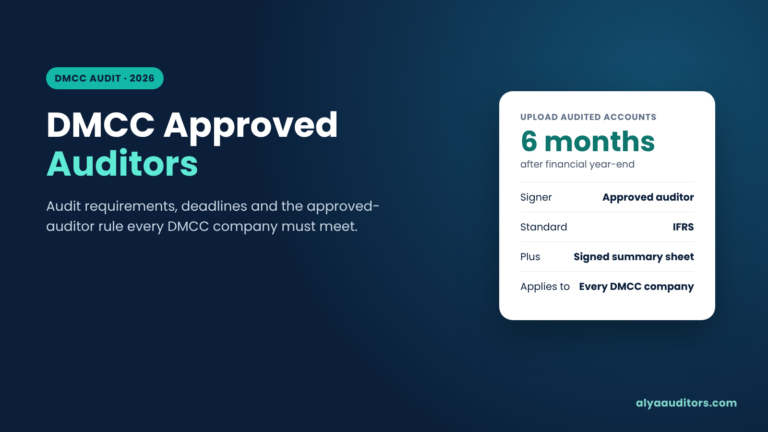 Audit & Assurance Services DMCC Approved Auditors: 2026 Audit Requirements Guide
October 12, 2026
Audit & Assurance Services DMCC Approved Auditors: 2026 Audit Requirements Guide
October 12, 2026
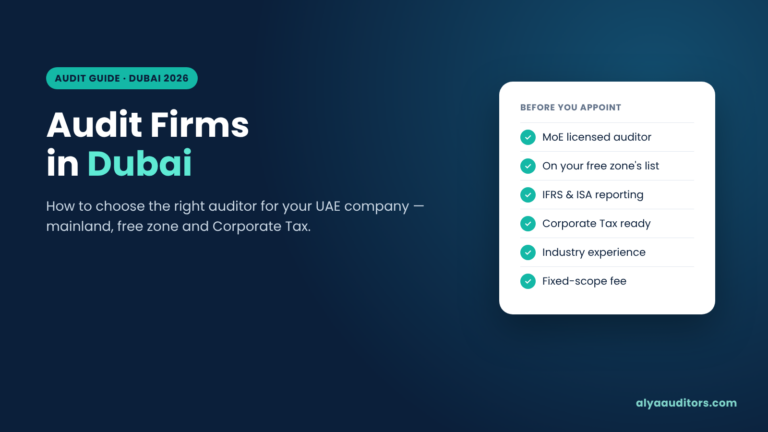 Audit & Assurance Services Audit Firms in Dubai: How to Choose the Right Auditor
October 9, 2026
Audit & Assurance Services Audit Firms in Dubai: How to Choose the Right Auditor
October 9, 2026
 Audit & Assurance Services Corporate Tax Registration UAE: Who Needs to Register and What Happens If You Delay?
October 5, 2026
Audit & Assurance Services Corporate Tax Registration UAE: Who Needs to Register and What Happens If You Delay?
October 5, 2026
Ready to Start?
Talk to a UAE compliance expert
Book a free, no-obligation consultation with ALYA Nexus Auditing.
Book Free Consultation ↗