
White Label Accounting vs Hiring In-House Staff
 August 7, 2026
11 min read
August 7, 2026
11 min read
White Label Accounting vs Hiring In-House Staff
White label accounting or an in-house hire — it’s a decision every growing consultancy, accounting firm, and business eventually faces, usually right around the moment client demand outpaces what the current team can handle. One path means recruiting, onboarding, and carrying a fixed salary. The other means partnering with an outside firm that delivers the work under your brand, without adding headcount.
Both paths get the accounting done. But they carry very different costs, risks, and trade-offs — and the wrong choice at the wrong stage of growth can quietly drain a business’s margins for years before anyone notices.
This guide compares white label accounting against hiring in-house, covers what each option actually costs in the UAE market, and lays out when one clearly beats the other.
Quick Answer: White label accounting means outsourcing bookkeeping, tax, and compliance work to an external firm that delivers it under your brand, while hiring in-house means employing a dedicated accountant on salary. White labeling typically costs less at low-to-moderate volume, scales up or down without hiring risk, and gives access to broader expertise — while in-house hiring offers more direct day-to-day control once volume is consistently high.
Table of Contents
1. What White Label Accounting Actually Means
White label accounting means an outside firm handles bookkeeping, VAT, corporate tax, or audit-adjacent work, while your business or consultancy stays the client’s only visible point of contact. The client sees your name on the reports. The work itself happens behind the scenes, delivered by a specialised partner.
- You keep the client relationship and the branding
- The partner firm handles the actual accounting work, using their own qualified staff
- You pay for the service delivered, not a fixed monthly salary
- Capacity scales up or down with client volume, without a hiring or firing decision either way
Hiring in-house is the more familiar alternative: you recruit an accountant, put them on payroll, and they work exclusively for you, full-time, regardless of how much or how little work comes in during any given month.
2. What an In-House Hire Actually Costs in the UAE
The advertised salary is only part of the real cost. Industry pay guides for 2026 put a junior-to-mid-level in-house accountant in Dubai somewhere between AED 8,000 and AED 18,000 a month in base salary alone, with qualified, experienced professionals commanding considerably more.
The Overheads That Don’t Show Up in the Salary Number
On top of salary, employers typically add roughly 25% in mandatory overheads — visa sponsorship, health insurance, and end-of-service gratuity, which UAE law requires for most private-sector employees after one year of continuous service. Add office space, software licensing, and ongoing training, and the true monthly cost of one in-house hire climbs well past the headline salary figure.
The Cost Doesn’t Flex With Demand
A salaried accountant costs the same in a slow month as a busy one. During audit season or corporate tax filing crunch, that fixed headcount might not be enough — and during quieter months, it’s paid capacity sitting partly idle.
Turnover Resets the Clock
When an in-house hire leaves, the cost doesn’t just pause — it restarts. Recruitment, onboarding, and the months it takes a new hire to reach full productivity all happen again, on top of whatever severance or gratuity is owed to the person leaving.
3. What White Label Accounting Typically Costs
Outsourced and white label accounting pricing in the UAE generally scales with transaction volume and service complexity rather than a flat monthly salary. Entry-level packages for straightforward bookkeeping often start under AED 1,000 a month, with more complex engagements — VAT filing, corporate tax support, payroll — priced well above that as volume and scope increase.
The structural difference matters more than any single number: you pay for what gets delivered, not for a person’s presence in an office regardless of workload. That structural shift is what makes white label accounting attractive even to firms that could technically afford an in-house hire.
4. White Label Accounting vs In-House Staff, Side by Side
- Cost structure: white label scales with volume; in-house is a fixed monthly cost regardless of workload
- Hiring risk: white label has none; in-house carries recruitment time, onboarding, and turnover risk
- Expertise breadth: white label partners typically bring a full team across bookkeeping, VAT, tax, and audit; a single hire covers only what they personally know
- Speed to start: white label can begin within days; hiring a qualified accountant can take weeks or months
- Day-to-day control: in-house staff sit in your office under your direct daily management; white label partners work under an agreed process and reporting cadence
- Continuity: white label partners have backup staff for leave or turnover; a single in-house hire leaving creates a real coverage gap
5. When Hiring In-House Actually Makes Sense
- Your transaction volume is consistently high enough to keep one or more accountants fully occupied year-round
- You need someone physically present for day-to-day operational decisions, not just periodic reporting
- Your business has reached a scale where building an internal finance function is a strategic priority, not just a compliance necessity
- You want full, direct control over hiring, training, and how the finance function evolves over time
In-house hiring earns its cost once volume and complexity justify a dedicated, full-time role — not before.
6. When White Label Accounting Makes More Sense
- You’re a business setup consultancy or small accounting firm wanting to offer accounting services without building a full team
- Client volume is growing but not yet predictable enough to justify a fixed salary commitment
- You need access to specialised expertise — audit, corporate tax, VAT — beyond what one generalist hire could cover
- You want to test demand for a new service line before committing to permanent headcount
- Seasonal spikes, like audit season or year-end filing, regularly outstrip what your current team can absorb
White label accounting fits almost any growth stage before headcount becomes the obvious next step — and for many small firms and consultancies, that point never actually arrives.
7. How White Label Accounting Works Day to Day
- You introduce the client’s accounting need to your white label partner
- The partner scopes the engagement and confirms turnaround expectations
- Bookkeeping, filings, and reports are prepared under your firm’s branding, or under an agreed level of visibility you both set upfront
- You review and deliver the output to your client, or the partner delivers it directly under your name
- You pay the partner for the work delivered, and keep the client relationship and margin on top
The client experience stays consistent. What changes is who’s actually doing the work behind your firm’s name.
8. A Worked Example: Cost Over a Full Year
Picture a business setup consultancy adding accounting support for 20 clients. Hiring one mid-level in-house accountant at AED 12,000 a month in salary, plus roughly 25% in overheads, runs close to AED 180,000 for the year — before accounting for software, a desk, or any backup during leave.
The same 20 clients handled through a white label partner, scaled to actual transaction volume, typically costs a fraction of that fixed figure in slower months, while still flexing upward during busier ones. The consultancy keeps every client relationship and still earns a margin on top of what it pays the partner — without ever carrying the salary risk of an empty desk in a slow quarter.
The gap only widens in year one specifically, since recruitment time, onboarding, and the learning curve of a new hire all delay when an in-house option starts paying for itself.
Run the same comparison at 60 or 80 clients instead of 20, and the calculus can shift — at high enough volume, a well-utilised in-house hire eventually costs less per client than an outsourced fee scaled to match. The point isn’t that one model always wins; it’s that the crossover point depends entirely on volume, and most growing firms haven’t reached it yet when they first start weighing the decision.
9. Common Concerns About White Label Accounting
“Won’t clients realise it’s not really our team?”
Most white label arrangements are structured so clients never need to know, and frankly rarely ask. What they notice is consistent, accurate, on-time delivery under your name — which is exactly what a good partnership is built to protect.
“What if we outgrow the partnership?”
That’s a good problem, and a normal transition. Many firms start with a white label partner, then bring specific functions in-house once volume clearly justifies it — the two models aren’t mutually exclusive over a business’s lifetime.
“Is quality control harder with an outside partner?”
It depends entirely on the partner. Ask about their review process, qualifications, and escalation procedure before signing anything — the same diligence you’d apply to any hire.
10. What to Look for in a White Label Accounting Partner
- Confirmed qualifications and, where relevant, Ministry of Economy accreditation for audit-adjacent work
- Clear confidentiality and branding terms — how visible the partner is to your clients
- Transparent, volume-based pricing rather than vague or negotiated-per-engagement rates
- Capacity to scale during your busiest months, not just steady-state workload
- A named point of contact who understands your clients’ industries and jurisdictions
11. Why Partner With Alya Auditors
Alya Auditors offers accounting services in the UAE, VAT consultancy, and audit and assurance services structured to work as a white label extension of your firm — you keep the client relationship, we deliver the work.
This model pairs naturally with the partnership approach covered in our guides on outsourcing audit work and recurring revenue for business setup consultants, since accounting, audit, and referral partnerships all solve the same underlying problem: growing your service offering without growing your fixed headcount.
Image Suggestions (For Publishing)
- Featured image: a small team reviewing financial reports together — alt text: “white label accounting team supporting a growing firm”
- Section 4 (comparison): a simple two-column comparison graphic — alt text: “white label accounting vs in-house staff comparison”
- Section 8 (worked example): a simple bar chart comparing annual cost — alt text: “white label accounting cost vs in-house hire over a year”
Use descriptive file names (e.g. white-label-accounting-vs-in-house-cost.jpg) rather than generic camera filenames.
Internal Linking Suggestions (For Publishing)
When this article goes live on alyaauditors.com, link the following existing pages within the body copy:
- Accounting Services in UAE — anchor: “accounting services in the UAE” (Section 11)
- VAT Consultants in Dubai — anchor: “VAT consultancy” (Section 11)
- Audit and Assurance Service — anchor: “audit and assurance services” (Section 11)
- Why Small Accounting Firms Should Outsource Audit Work — anchor: “outsourcing audit work” (Section 11)
- How Business Setup Consultants Can Earn Recurring Revenue — anchor: “recurring revenue for business setup consultants” (Section 11)
- Why Bookkeeping Is Mandatory in Dubai — anchor: “bookkeeping” (Section 1/3, foundational compliance context)
Frequently Asked Questions
Is white label accounting cheaper than hiring in-house?
Usually, at low-to-moderate volume. In-house hiring carries a fixed salary plus roughly 25% in overheads regardless of workload, while white label pricing scales with actual transaction volume, which tends to cost less until demand is consistently high.
Can a small accounting firm offer white label accounting under its own brand?
Yes. That’s the core of the model — the partner firm delivers the work, but the client only ever sees your firm’s name and reporting.
How fast can a white label accounting partnership start?
Typically within days, since there’s no recruitment, visa processing, or onboarding period involved — unlike hiring a new in-house accountant, which can take weeks or months.
Does white label accounting work for audit services too?
Audit specifically requires a Ministry of Economy-registered auditor to sign the report, so audit outsourcing works slightly differently from general accounting white labeling — though the underlying partnership logic is the same.
At what point should a firm switch from white label to in-house?
Generally once transaction volume is high and predictable enough to keep a dedicated hire fully occupied year-round, and the cost of a fixed salary is clearly lower than continued white label fees at that volume.
Do clients need to know a white label partner is involved?
Not necessarily. Confidentiality and branding terms are typically agreed upfront, and many arrangements are structured so the client experience is seamless.
Is it risky to rely on an outside partner for accounting?
Any dependency carries some risk, whether it’s a single in-house employee or an external partner. The difference is that a properly structured white label partnership typically has backup staff and documented processes, which is often more resilient than a single employee being the sole point of failure.
Can Alya Auditors act as a white label accounting partner?
Yes. Alya Auditors provides accounting services that can operate as a white label extension of your firm or consultancy. Get in touch with Alya Auditors to discuss a white label partnership.
Conclusion
White label accounting and in-house hiring aren’t rivals so much as two tools suited to different stages of growth. Hiring earns its cost once volume is high and consistent enough to keep a dedicated accountant fully occupied. Until then, white label accounting lets a firm or consultancy offer the same services, under its own name, without carrying a fixed salary through slow months.
Most growing firms don’t need to choose once and stick with it forever. Many start white label, prove out demand, and bring specific functions in-house only once the numbers clearly justify it — treating the decision as a stage of growth rather than a permanent identity for the business.
If you’re weighing a new hire against a partnership right now, run the actual numbers for your volume first — the fixed cost of a salary rarely looks as attractive once overheads and idle capacity are counted in.
Partner With Alya Auditors
Alya Auditors works as a white label accounting partner for consultancies and small firms across the UAE, so you can grow your service offering without growing your fixed headcount. Visit alyaauditors.com or call +971 52 975 0690 to discuss a white label partnership.

Keep reading
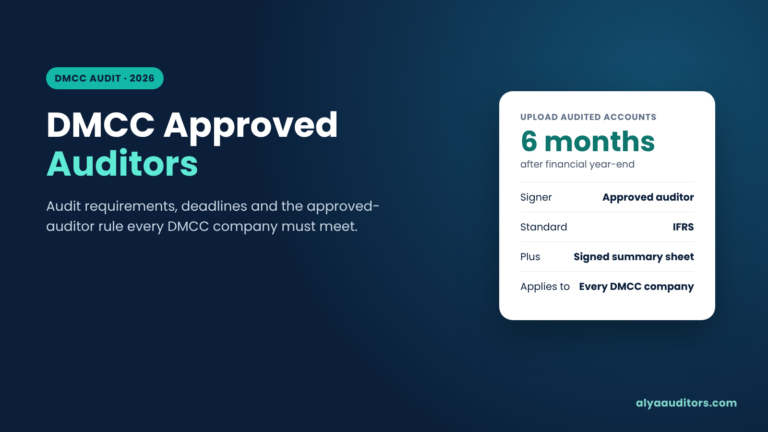 Audit & Assurance Services DMCC Approved Auditors: 2026 Audit Requirements Guide
October 12, 2026
Audit & Assurance Services DMCC Approved Auditors: 2026 Audit Requirements Guide
October 12, 2026
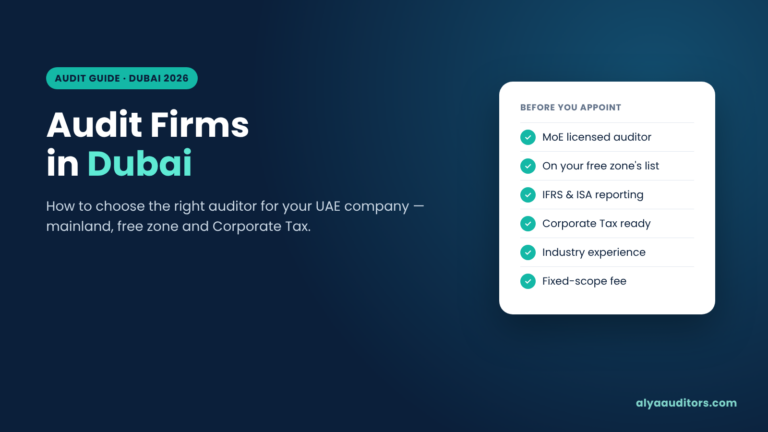 Audit & Assurance Services Audit Firms in Dubai: How to Choose the Right Auditor
October 9, 2026
Audit & Assurance Services Audit Firms in Dubai: How to Choose the Right Auditor
October 9, 2026
 Audit & Assurance Services Corporate Tax Registration UAE: Who Needs to Register and What Happens If You Delay?
October 5, 2026
Audit & Assurance Services Corporate Tax Registration UAE: Who Needs to Register and What Happens If You Delay?
October 5, 2026
Ready to Start?
Talk to a UAE compliance expert
Book a free, no-obligation consultation with ALYA Nexus Auditing.
Book Free Consultation ↗