
How to Choose an E-Invoicing Service Provider (ASP) in the UAE: 2027 Checklist
 November 3, 2026
9 min read
Every UAE business that issues B2B or B2G invoices has to appoint an Accredited Service Provider (ASP) before it can go live with e-invoicing. Large businesses had to choose one by 30 October 2026. Everyone else has until 31 March 2027. The ASP you pick will sit between your accounting system, your customers and the Federal Tax Authority (FTA) for years, so it is worth choosing carefully. This guide explains what an ASP does, the deadlines, a 10-point checklist for comparing providers, the questions to ask in a demo and the red flags to watch for.
Quick answer: Choose an ASP that is on the Ministry of Finance’s list of accredited providers, connects to your ERP or accounting software without replacing it, validates every invoice against the PINT-AE rules before sending it, can both send and receive e-invoices, and gives you clear reports on rejected invoices. Check its data security, how long it keeps your records, its pricing model and how easily you can leave. Businesses under AED 50 million must appoint their ASP by 31 March 2027 and go live by 1 July 2027.
What does an Accredited Service Provider do?
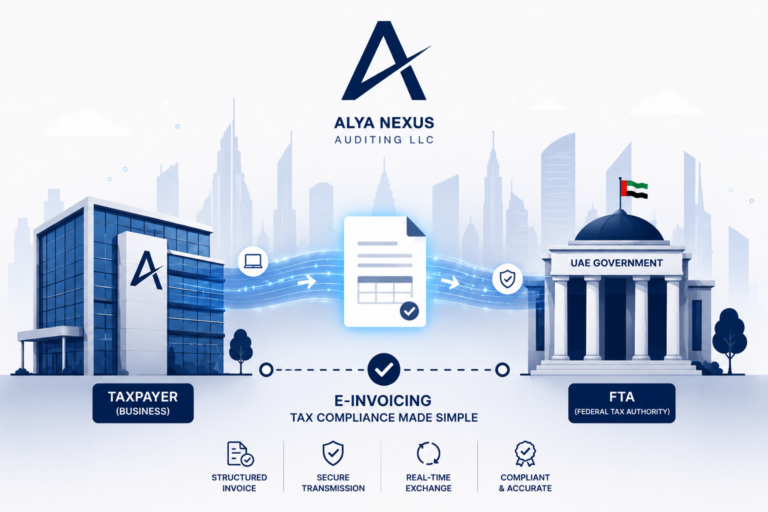
The UAE uses the PEPPOL “five-corner” model. You (corner 1) issue the invoice. Your ASP (corner 2) converts it into the UAE’s PINT-AE XML format, checks it, and sends it over the PEPPOL network to your customer’s ASP (corner 3), which delivers it to your customer (corner 4). At the same time, the tax data goes to the FTA (corner 5). Your ASP also receives the e-invoices your suppliers send you.
In practice, an ASP is responsible for:
- Taking invoice data from your system and converting it to PINT-AE XML
- Validating each invoice (TRNs, VAT amounts, mandatory fields) before it leaves
- Sending invoices and credit notes to your customers’ ASPs over PEPPOL
- Receiving e-invoices from your suppliers and passing them into your system
- Reporting the tax data to the FTA
- Keeping a secure, tamper-proof record of every transaction
What an ASP does not do is make your invoices correct in the first place. If your customer master data has missing TRNs or your items have the wrong VAT treatment, the ASP will reject those invoices. That is why the best projects combine a technically strong ASP with a tax review of your data. For the full technical background, see our UAE e-invoicing 2027 readiness guide.
When must you appoint your ASP?
| Who | Appoint an ASP by | Go live by |
|---|---|---|
| Businesses with revenue of AED 50 million or more | 30 October 2026 (passed) | 1 January 2027 |
| All other businesses | 31 March 2027 | 1 July 2027 |
| Government entities | 31 March 2027 | 1 October 2027 |
Source: Ministerial Decisions No. 243 and 244 of 2025 (as amended). Invoices between members of the same VAT tax group are out of scope until 31 December 2028 under Ministerial Decision No. 197 of 2026, but group members still need an ASP for invoices to outside customers.
Missing the deadline is expensive. Under Cabinet Decision No. 106 of 2025, not appointing an ASP or not going live on time costs AED 5,000 for each month, and each e-invoice not issued or sent correctly costs AED 100, capped at AED 5,000 a month. Our guide to e-invoicing penalties explains how they add up.
10-point checklist for choosing an e-invoicing ASP
1. It is accredited by the Ministry of Finance
Only accredited providers can connect you to the UAE e-invoicing system. The Ministry of Finance publishes the list of pre-approved service providers on its website. Check the provider’s legal name on that list, not just its brand name, and confirm the accreditation covers the UAE (a PEPPOL access point in another country is not enough on its own).
2. It connects to your ERP or accounting software
Ask exactly how the provider will get invoices out of your system: a ready-made connector, an API, or file exports. Ask for references from clients on the same software as you (SAP, Oracle, Microsoft Dynamics 365, Zoho Books, QuickBooks, Xero, Tally or a custom ERP). A provider that asks you to retype invoices into its own portal is fine for a handful of invoices a month, not for a business that issues hundreds.
3. It validates invoices before they are sent
Each rejected invoice can attract a penalty, so validation matters. A good ASP checks every invoice against the PINT-AE rules and tells you, in plain language, what is wrong (for example “buyer TRN missing” or “VAT total does not match the lines”) before the invoice leaves your business.
4. It can receive invoices, not just send them
Your suppliers will start sending you e-invoices too. Check that the provider can receive them, convert them into something your accounts team can use, and post them into your system, so you are not printing XML files.
5. It handles credit notes and the awkward cases
Ask how the provider deals with credit notes, self-billing, invoices in foreign currency, zero-rated and exempt supplies, and sales to customers outside the UAE. These are where most errors happen. A provider who can only show you a simple standard-rated invoice in the demo has not yet been tested on your real business.
6. It tells you clearly what reached the FTA
You need a dashboard or report that shows, for every invoice, whether it was delivered, rejected or reported to the FTA, and alerts when something fails. Without this you cannot prove compliance or fix problems before penalties build up.
7. Your data is secure and kept for long enough
Ask for evidence of the provider’s information security (for example ISO 27001 certification), where your data is hosted, and how long it keeps your invoices. Since 1 October 2026 the rule that e-invoice data must be stored in the UAE has been removed, but you still have to keep your records for the retention period in the Tax Procedures Law and produce them to the FTA on request. Make sure the provider’s archive covers that period, or that you can export everything to your own archive.
8. The pricing fits how you invoice
Providers charge in different ways: a one-off set-up or integration fee, an annual subscription, a price per invoice, or bundles of invoices. Ask for a quote based on your actual monthly volumes of sent and received invoices, and check what counts as an “invoice” (credit notes and received invoices are sometimes charged separately). The cheapest per-invoice price is not the cheapest project if the integration is weak and your team spends hours fixing rejections.
9. There is real support, including tax knowledge
Find out who you call when invoices are rejected the day before your VAT return is due. Look for UAE-based support during UAE working hours and access to people who understand VAT, not only software. Many rejections are tax questions in disguise.
10. You can leave if you need to
Check the contract length, notice period and what happens to your data if you switch. You should be able to export all your e-invoices and their status in a standard format at no extra cost.
Questions to ask in an ASP demo
- Can you show your entry on the Ministry of Finance list of accredited providers?
- Which clients on our accounting software are already live with you?
- Can you run three of our real invoices, including a credit note, through validation during the demo?
- What does a rejection message look like, and who fixes it?
- How do received invoices get into our system?
- How long do you keep our invoices, and how do we export them?
- What exactly is included in the price, and what costs extra?
- How long will our set-up and testing take, and what do you need from us?
Red flags to watch for
- The provider is not on the Ministry’s list but says it is “in the process” of accreditation.
- A PDF-only demo. If they cannot show a PINT-AE XML file and a validation report, keep looking.
- No answer on receiving invoices or on credit notes.
- Long lock-in contracts with no data export clause.
- A quote that ignores your volumes or leaves set-up “to be confirmed”.
- Promises of go-live in days without any data review. Most businesses need 4 to 8 weeks.
Software provider, ASP or tax adviser: who does what?
| Task | Your ERP or software provider | ASP | Tax adviser |
|---|---|---|---|
| Produce the invoice data | Yes | No | No |
| Convert to PINT-AE and validate | Sometimes, partly | Yes | No |
| Send and receive over PEPPOL, report to the FTA | No | Yes | No |
| Check VAT treatment, TRNs and master data | No | Flags errors | Yes |
| Advise on credit notes, exemptions, tax groups | No | Limited | Yes |
Some businesses use three separate parties. Others prefer one firm that is both the ASP and the tax adviser, so there is one point of contact when something goes wrong.
A simple plan for businesses under AED 50 million
- November to December 2026: list your invoice types and volumes, check your customer TRNs and item VAT codes, and shortlist two or three accredited providers.
- January to February 2027: run demos with your real invoices, compare quotes and sign with your chosen ASP.
- By 31 March 2027: your ASP appointment is complete.
- April to May 2027: connect your system, test in a sandbox and fix rejected invoices.
- June 2027: train your team and test receiving invoices from key suppliers.
- 1 July 2027: go live.
Missed the 30 October 2026 deadline?
If your business has revenue of AED 50 million or more and you have not yet appointed an ASP, do it now. The go-live date of 1 January 2027 has not moved, and the monthly penalty for not appointing an ASP or not going live on time applies until you comply. Focus first on getting your most frequent invoice types live, then add the rest.
How Alya can help
Alya Auditors is an accredited service provider and a PEPPOL access point, with an in-house VAT team. We connect to your existing ERP or accounting software, check your invoice data before go-live, send and receive your e-invoices and report them to the FTA. See our UAE e-invoicing services to check your deadline and book a free readiness call, or talk to our VAT consultants about the tax side.
Frequently asked questions
Is an ASP the same as my accounting software?
No. Your accounting software creates the invoice. The ASP converts it to PINT-AE, validates it, sends it over PEPPOL and reports it to the FTA. Some software companies partner with an ASP, but the ASP itself must be accredited.
Can I use more than one ASP?
Most businesses use one ASP to keep things simple. Groups with several entities or systems sometimes use more than one, but each invoice must go through an accredited provider.
Can I change my ASP later?
Yes, but plan it like a new project, with testing before you switch. Make sure your contract lets you export all your invoices and their status.
Do B2C invoices need to go through an ASP?
Not at present. The mandate covers B2B and B2G transactions. If you sell to both businesses and consumers, your system must tell the two apart.
How long does it take to go live with an ASP?
Most businesses need 4 to 8 weeks, depending on their systems, invoice volumes and the state of their data. Start at least three months before your go-live date.
This guide reflects UAE e-invoicing rules as we understand them in November 2026. The Ministry of Finance and the FTA update guidance regularly, so confirm your dates and obligations before acting.



Ready to Start?
Talk to a UAE compliance expert
Book a free, no-obligation consultation with ALYA Nexus Auditing.
Book Free Consultation ↗